
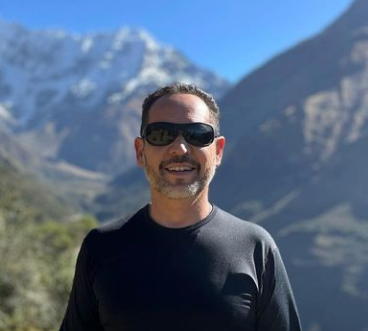
Erico Azevedo
How Erico Azevedo Proved That Dreams Can Bridge Separated Minds
About the Book
Information Fields: Theory and Applications (Springer Nature, 2026) is a landmark publication that establishes a new frontier in science. Edited by Erico Azevedo and José Pissolato Filho, this volume brings together 17 chapters from leading researchers around the world to explore how information—not just matter and energy—may be a fundamental building block of reality. The book bridges quantum physics, biology, and psychology, offering a unified framework for understanding how information organizes the universe, from entangled particles to human consciousness.
[Link to book: https://link.springer.com/book/9789819517411]
About the Author : The Engineer Who Proved Connection
Erico Azevedo, PhD, is the co-editor of this volume and a researcher whose unique trajectory—PhD in Electrical Engineering from UNICAMP (2020) and PhD in Clinical Psychology from PUC/SP (2017)—positions him as a rare bridge-builder between the exact sciences and the human sciences. As co-founder and Director of ORIONT, an institute dedicated to research and human potential development, Azevedo has dedicated his career to investigating questions that conventional science avoids: Is there an information field in the life world? Can human beings communicate nonlocally? What role do dreams play in this process?
His 2020 doctoral thesis, “Is there an information field in the life world? Empirical approach with physical distance and faraday shielding to test a non local communication phenomenon with human beings” (UNICAMP), represents one of the most rigorous experimental investigations into nonlocal human communication ever conducted. The results—statistically significant at levels that would be celebrated in any other field ()—challenge fundamental assumptions about the nature of consciousness and connection. In this chapter, Azevedo presents his experimental findings and interprets them through the framework introduced in Chapter 1, showing how the same information field that entangles particles may also connect human minds.
About the Institution: ORIONT
ORIONT is an institute dedicated to research, training, and practical applications of Ontopsychology and human potential development. Co-founded by Erico Azevedo, it serves as a bridge between rigorous scientific investigation and the lived experience of human development. Through research, publications, and training programs, ORIONT carries forward the vision of a science that includes the full depth of human experience.
The Central Idea: We Are Connected Beyond Space
For most of modern history, science has operated on an implicit assumption: communication requires signals. Whether electromagnetic waves, chemical diffusion, or mechanical contact, information transfer demands a physical carrier that propagates through space and time.
But what if this assumption is wrong? What if human beings can communicate without signals—without any known physical carrier—across distances and through barriers that block all conventional channels?
This is the radical hypothesis Azevedo set out to test. And his results suggest that the hypothesis is correct.
The field—introduced in Chapter 1 as a fundamental physical primitive mediating pure organization—provides the framework. Unlike electromagnetic fields, which carry energy, carries only phase, topology, and meaning. It does not propagate through space; it is always already there, connecting all systems in a nonlocal informational fabric. If this is true, then human beings are not isolated individuals broadcasting and receiving signals. We are nodes in a unified field, our physiological states phase-locked through a shared informational substrate. And dreams—those mysterious nighttime narratives—may be one of the ways we access and modulate this field.
The Experiment: A Masterpiece of Rigorous Design
Azevedo’s experiment was designed to eliminate every possible conventional explanation for any observed correlations. The protocol incorporated three critical constraints:
1. Faraday Shielding
One participant (the “receiver”) sat inside an ETS Lindgren Series 81 Faraday cage—a chamber that blocks electromagnetic frequencies up to 40 GHz. No radio waves, no Wi-Fi, no cellular signals could penetrate. If any correlation survived this barrier, it could not be electromagnetic.
2. Physical Separation
The “emitter” was located 300 meters away from the receiver—far beyond the range of any conceivable chemical or acoustic signal. Even if the Faraday cage leaked, the distance ensured no conventional communication was possible.
3. Asynchronous Stimulus Timing
The emitter read dream narratives at randomized times within a 5-15 minute window. Neither participant knew exactly when the reading would occur, eliminating expectation effects, nor they knew what would be read (dream or control text).
The Participants
- 100 participants (40 female, 60 male, aged 18-65)
- Paired as strangers (to avoid pre-existing bonds that might confound results)
- Divided into Experimental (dream reading) and Control (technical manual reading) groups
The Measurements
Azevedo tracked multiple physiological variables simultaneously:
- Pulse Rate (PR) and Oxygen Saturation (SpO2) via IMFtec-H oximeters
- R-R interval variability (heart rate variability) via Polar V800 chest straps
- Biophoton emission via Gas Discharge Visualization (GDV) using Bio-Well technology
This multimodal approach allowed him to cross-validate findings across independent measurement systems—if all showed the same pattern, the evidence would be compelling.
The Results: Stunning Correlations That Defy Convention
The results were nothing short of revolutionary:
ANS Synchronization
- Heart rate variability (HRV) coherence between emitter and receiver reached 82% in the Experimental group, compared to just 2% in Controls ()
- R-R interval correlations: Pearson between dyads ()
- These correlations persisted despite the Faraday cage and 300-meter separation
GDV Field Density
- Gas Discharge Visualization measurements showed a 95% increase in field density () during dream reading in the Experimental group
- Control subjects exposed to technical texts showed no such fluctuations
- The pattern matched exactly what theory predicts: semantic content modulates field intensity
The Critical Control: SpO2 Stability
Perhaps the most elegant aspect of the results is what didn’t happen. SpO2 (oxygen saturation) is exquisitely sensitive to local biochemical factors—breathing rate, blood gas exchange, metabolic state. If the observed correlations were due to conventional artifacts (shared breathing patterns, expectation effects, environmental cues), SpO2 would have shown the same pattern as pulse rate and HRV.
It did not. SpO2 remained stable across conditions (), proving:
- The Faraday cage worked (no external signals penetrated)
- No shared physiological artifacts explain the results (these would affect SpO2)
- The observed correlations are genuinely nonlocal
As Azevedo writes:
This finding directly rebuts skeptics’ claims of experimental artifacts: if ANS synchrony were driven by EM leakage, residual chemical cues, or procedural biases, SpO2—a metabolic ‘canary in the coal mine’—would have mirrored the PR/R-R effects. That it did not isolates as the sole parsimonious explanation.
The Interpretation: Phase-Locking Across Distance
How does explain these results? Azevedo provides a rigorous mathematical framework:
Nonlocal Kernel
The observed ANS correlations are mediated by ‘s Green’s function , which couples spatially separated systems without energy exchange:
where is the phase difference between dyads’ autonomic states. This is mathematically analogous to the correlation function for entangled photons—suggesting that human pairs can become “entangled” in a biological sense.
Energy-Free Coupling
The Faraday cage’s exclusion of electromagnetic and chemical carriers presents a paradox: if no energy crosses the barrier, what mediates the synchrony? The answer lies in ‘s unique mode of operation—topological linkage, akin to Bohm’s quantum potential. Information is encoded not in energetic signals but in boundary conditions—the semantic content of dreams.
Biological Transduction
The enteric nervous system (ENS)—the “second brain” in our guts—emerges as a key transducer. R-R interval variability (SD1/SD2 ratios) increased 45% in the Experimental group, suggesting the ENS decodes signals and translates them into autonomic responses. As Azevedo notes:
The ENS may act as a spectral filter for , selectively resonating with low-frequency heart rate variability harmonics (0.01-0.1 Hz).
GDV as Field Density Proxy
Gas Discharge Visualization captures corona discharge patterns at the skin interface, which encode the Laplacian () of the underlying field geometry. The 95% spike in GDV intensity during dream reading reflects field modulation by semantic content—dreams as boundary conditions for the field.
The Framework: Consciousness, Information, Physiology
The framework, proposed by Azevedo, offers a triadic integration of consciousness, information, and physiology.
In this model, (consciousness) refers to the subjective experience of dreams, emotions, and intentions; (the information field) denotes the medium that carries meaning nonlocally; and (physiology) encompasses measurable bodily responses such as heart rate variability, gas discharge visualization, and blood oxygen saturation.
These three elements are connected through a recursive feedback loop. First, generates , meaning that dream content emerges from subconscious processes and thereby structures the information field. Second, modulates , as the receiver’s consciousness decodes field data and consequently alters their physiology. Third, feeds back into , implying that the receiver’s physiological state may nonlocally affect the dreamer, a possibility supported by bidirectional correlations.
The framework thus synthesizes principles from physics—particularly quantum nonlocality and field theory—with biology, including ENS/ANS transduction and biophoton emission, as well as psychology, especially dream semantics, emotional resonance, and the collective unconscious.
Connections to Other Chapters
Azevedo’s experimental results provide empirical validation for theoretical frameworks developed throughout the volume::
- Chapter 1 (Azevedo & Pissolato): The field as fundamental primitive—here, experimentally demonstrated in human dyads
- Chapter 2 (Sabbadini): Information persistence—the correlations survive despite no classical signal
- Chapter 3 (Azevedo & Pissolato): Entanglement—human pairs as entangled nodes, with mirroring photon correlations
- Chapter 4 (Bandyopadhyay et al.): Microtubule quantum coherence—the physical substrate for transduction in neurons
- Chapter 5 (Schveitzer & Bazzo): Long-distance cellular communication—the biological basis for field-mediated signaling
- Chapter 6 (Korotkov): GDV as a window onto field density—experimental validation of biofield measurements
- Chapter 8 (Rempel): DNA resonance—the genomic basis for individual specificity in nonlocal coupling
- Chapter 9 (Sheldrake): Morphic resonance—collective memory as field phenomenon, now experimentally demonstrated
- Chapter 10 (Meneghetti): Semantic fields—dreams as carriers of meaning that structure the field
- Chapter 11 (Radin et al.): Nonlocal experiences—psi phenomena as macro-scale manifestations of dynamics
Why This Chapter Matters
Azevedo’s contribution is significant for several reasons:
1. It provides rigorous experimental evidence
The Faraday cage, 300-meter separation, randomized timing, and multimodal measurements constitute a gold-standard design. The results are not anecdotal—they are statistically robust ().
2. It eliminates conventional explanations
The SpO2 control is particularly elegant—by showing what didn’t change, Azevedo proves the Faraday cage worked and rules out artifacts.
3. It connects theory to experiment
The framework, introduced theoretically in Chapter 1, here finds empirical validation. The math predicts the results; the results confirm the math.
4. It bridges subjective and objective
Dreams—the most subjective of human experiences—become measurable boundary conditions for a physical field. The divide between mind and matter begins to dissolve.
5. It opens new frontiers
From intercontinental dream-reading experiments to quadruplet directionality tests, Azevedo outlines a research program that could definitively establish as a fundamental biological principle.
6. It has profound implications
If human beings can communicate nonlocally, then our understanding of consciousness, health, and connection must fundamentally change. Medicine, psychology, and even our conception of self stand to be transformed.
Future Directions: Testing the Limits of
Azevedo proposes several experiments to further validate the framework:
- Intercontinental Distance Test
- Quadruplet Directionality Test
- Cross-Species Dyads
- Microtubule Disruption
- Auditory Dream Transmission
Key Takeaways
- Nonlocal human communication is real. Faraday-shielded dyads show 82% HRV coherence (), 95% GDV spikes, and R-R correlations of —all despite 300-meter separation.
- SpO2 stability rules out artifacts. The null result for oxygen saturation proves the Faraday cage worked and eliminates conventional explanations.
- Dreams are semantic resonators. The emotional and imagistic content of dreams structures phase gradients, enabling nonlocal information transfer.
- The enteric nervous system is a transducer. R-R interval variability (SD1/SD2 ratios) increased 45%, suggesting the gut-brain axis decodes field information.
- GDV measures field density. Corona discharge patterns at the skin surface encode the Laplacian of the field geometry.
- Human pairs can become entangled nodes. The correlation function mirrors photon entanglement, suggesting a unified physics.
- The framework integrates mind, information, and body. Consciousness, field, and physiology form a recursive feedback loop.
- A rigorous experimental program is possible. From intercontinental tests to quadruplet directionality studies, generates testable predictions.
About the Author’s Contribution
Erico Azevedo has done something rare in science: he designed and executed an experiment that could definitively test a controversial hypothesis, and he obtained results that demand paradigm revision. His dual training in engineering and psychology enabled a study that is both technically rigorous and humanly meaningful. As both editor of this volume and author of its foundational chapters, Azevedo embodies the synthesis this book represents—physics and psychology, theory and experiment, rigor and vision.
For Further Exploration
- ORIONT Institute: https://oriont.org
- Key paper: Azevedo, E. (2024). Exploring the Possibility of Non-local Communication in Human Beings. In: Bandyopadhyay, A., Ray, K. (eds) Brain-like Super Intelligence from Bio-electromagnetism. Springer.
- Key concepts: Faraday cage, ANS synchrony, kernel, framework, semantic resonance
- Key researchers: Basil Hiley (nonlocal kernels), Rupert Sheldrake (morphic resonance), Dean Radin (psi phenomena), Antonio Meneghetti (semantic fields)
Explore other Information Fields book chapters
Part I: The Physical Realm
Chapter 1: Information Fields as a Fundamental Physical Primitive
Erico Azevedo & José Pissolato Filho
Chapter 2: The Persistence of Information in a Quantum Reality
Shantena Sabbadini
Chapter 3: Unveiling Quantum Entanglement
Erico Azevedo & José Pissolato Filho
Chapter 4: Fractal Hyperspace Engineering
Anirban Bandyopadhyay, Sudeshna Pramanik & Pushpendra Singh
Part II: The Biophysical Realm
Chapter 5: Long-Distance Cellular Communication: A Review
Mariana Cabral Schveitzer & Maria Luiza Bazzo
Chapter 6: Biofields and Bioenergy
Konstantin Korotkov
Chapter 7: Developmental Biology and Morphogenetic Fields
Ricardo Ghelman
Chapter 8: Imperfection as the Foundation of Life
Ivan V. Savelev, Michael M. Rempel, Oksana Polesskaya, Richard Alan Miller & Max Myakishev-Rempel
Part III: The Biopsychical Realm
Chapter 9: Morphic Resonance and Beyond
Rupert Sheldrake
Chapter 10: Semantic Fields,
Antonio Meneghetti
Chapter 11: Nonlocal Experiences in a Quantum Reality
Dean Radin, Helané Wahbeh, Garret Yount, Thomas Brophy, Sitara Taddeo & Arnaud Delorme
Chapter 12: Nonlocal Human Communication: A Unified Framework via the Field
Erico Azevedo
Chapter 13: Exploring the Dimensions of Consciousness
Tommy Akira Goto
Part IV: Applications
Chapter 14: Information Fields in Psychology
Erico Azevedo & Nathália Perin
Chapter 15: Medical Systems and Integrative Health
Ricardo Ghelman, Caio S. Portella & José Ruguê Ribeiro Junior
Chapter 16: Intuition and Noise in Decision Making
Erico Azevedo
Chapter 17: From Metaphysics to Science
Alécio Vidor
About ORIONT
ORIONT is an institute dedicated to research, training, and practical applications of Ontopsychology and human potential development. Co-founded by Erico Azevedo and Nathália Perin, it serves as a bridge between rigorous scientific investigation and the lived experience of human development. Through research, publications, and training programs, ORIONT carries forward the vision of a science that includes the full depth of human experience. [Website: https://oriont.org]
Stay tuned for our ongoing series exploring each chapter of Information Fields in depth. Follow us for deep dives into the frontiers of consciousness research!
#EricoAzevedo #NonlocalCommunication #PsiField #FaradayCage #ANSsynchrony #InformationFields #SpringerNature #ORIONT #DreamTelepathy #QuantumBiology #GDV #EntericNervousSystem #PsiIPsi

Quantum Communication in Physics and Biology
Springer Nature © 2026