
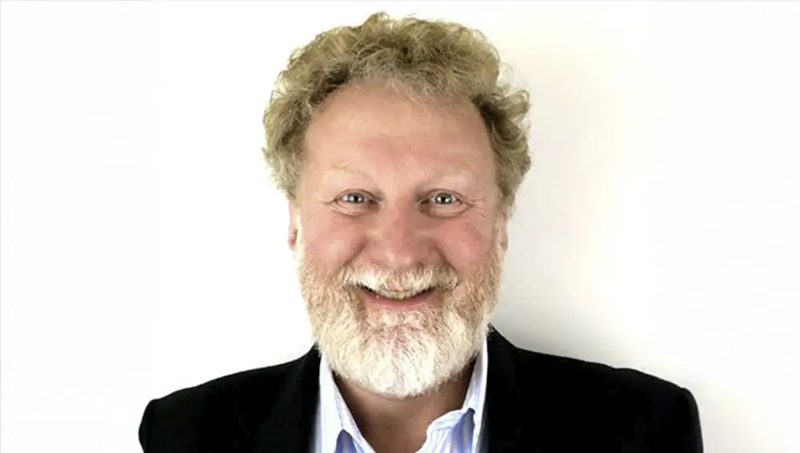
Max Myakishev-Rempel, Ivan V. Savelev, Michael M. Rempel, Oksana O. Polesskaya, Richard Alan Miller
How Max Myakishev-Rempel Reveals DNA as the Interface Between Matter and Consciousness
About the Book
Information Fields: Theory and Applications (Springer Nature, 2026) is a landmark publication that establishes a new frontier in science. Edited by Erico Azevedo and José Pissolato Filho, this volume brings together 17 chapters from leading researchers around the world to explore how information—not just matter and energy—may be a fundamental building block of reality. The book bridges quantum physics, biology, and psychology, offering a unified framework for understanding how information organizes the universe, from entangled particles to human consciousness.
[Link to book: https://link.springer.com/book/9789819517411]
About the Author: A Geneticist Who Dares to Ask Deeper Questions
Max Myakishev-Rempel, PhD, is a geneticist and researcher whose work challenges the conventional boundaries of molecular biology. Based at the DNA Resonance Research Foundation in San Diego, California, Rempel has spent decades exploring questions that most geneticists avoid: Does DNA do more than code for proteins? Could it participate directly in consciousness? What role do the vast non-coding regions of the genome—dismissed as “junk DNA”—actually play?
His journey represents a return to questions that were once considered legitimate but were abandoned as molecular biology became increasingly reductionist. In the 1960s and 1970s, researchers like Per-Olov Löwdin, Richard Alan Miller, and Webb explored quantum genetics and DNA holography. Their work was largely forgotten, dismissed as fringe. Rempel picks up their torch, armed with modern genomic data, computational tools, and a willingness to follow evidence wherever it leads.
This chapter is a sweeping synthesis: part theoretical physics, part molecular biology, part consciousness studies, part philosophy. It proposes nothing less than a new understanding of what DNA is and what it does.
About the Institution: DNA Resonance Research Foundation
The DNA Resonance Research Foundation (San Diego, CA) is dedicated to investigating the vibrational and informational properties of DNA. Its mission is to bridge the gap between conventional molecular biology and the emerging science of information fields, exploring how DNA’s dynamic behavior may underlie both biological form and conscious experience.
The Central Idea: DNA as Interface
For most of modern biology, DNA has been understood as a chemical blueprint—a string of letters that codes for proteins, which then do the work of the cell. This view has been enormously successful, but it leaves fundamental questions unanswered:
- How does a linear sequence of nucleotides produce a three-dimensional organism?
- Why do children resemble their parents not just in appearance but in mannerisms, thinking patterns, and personality—even when raised apart?
- How do identical twins, separated at birth, sometimes lead eerily similar lives?
- What is the function of the 95% of the genome that doesn’t code for proteins?
Rempel proposes a radical answer: DNA is not just a chemical molecule. It is also an interface—a bridge between the material world and universal consciousness.
The 250 grams of DNA in the human body are not static. They constantly dance, reorganize, and vibrate. Chromatin—the substance of chromosomes—exists in a perpetual state of dynamic restructuring, a “chromatin dance” that balances order and chaos. This dance creates a holographic field that serves two functions:
- Morphogenesis: Guiding the formation and maintenance of the body’s three-dimensional structure
- Consciousness: Participating directly in thinking, memory, and subjective experience
As Rempel writes:
The contribution of the genomic program to brain structure is undeniable. And brain structure is absolutely essential for the work of the mind—when brain structure is damaged, as in lobotomy, personality changes radically. This does not exclude the possible overlay of information external to the body on top of genetic information to produce individual consciousness.
Imperfection as a Fundamental Principle
One of the most original ideas in Rempel’s chapter is the role of imperfection. Life, he argues, is not based on perfect order but on a dynamic balance between order and chaos—and this balance requires imperfection at every level.
The Molecular Origin of Imperfection
DNA has a well-established double helical structure with 10.5 base pairs per turn. Water, on the other hand, has hexagonal honeycomb symmetry arising from the 180° angle of the water molecule. These symmetries do not align perfectly. This geometric mismatch causes DNA to jitter, twisting back and forth around its axis.
This is not a flaw—it is a feature. This constant jittering, this dynamic tension between incompatible symmetries, is the key to biological life. It keeps DNA in a state of perpetual reorganization, making it sensitive to subtle influences.
Imperfection at Every Scale
The same principle repeats across scales:
- Water structures grow and dissolve in dynamic equilibrium
- Chromatin constantly folds and unfolds in cell nuclei
- Microtubules self-organize and disassemble
- Organisms develop, adapt, and evolve
- Ecosystems balance creation and decay
- Stars form and collapse
As above, so below. Imperfection is not an error in the design of life—it is the foundation of life.
The DNA Hologram: From Linear Code to 3D Field
The idea of a DNA hologram was first proposed by Richard Alan Miller and Webb in the 1970s. They suggested that the linear DNA sequence creates a three-dimensional field that guides the formation of body shape and mind. Rempel develops this idea further, integrating it with modern understanding of chromatin dynamics.
How It Works
- Each cell contains 6 billion base pairs of DNA—1.5 Gigabytes of information.
- The primary DNA sequence is nearly identical across all cells, but each cell has a unique pattern of DNA methylation and three-dimensional chromatin folding.
- This perpetual, sequence-specific chromatin dance creates an electromagnetic and electroacoustic interference pattern—a holographic field.
- Because DNA is a highly charged molecule (each phosphate group carries a negative charge), this field is not metaphorical but physical.
Why Size Matters
DNA’s dimensions place it at a unique boundary. With a width of just 2 nanometers, it is small enough to be governed by quantum laws—superposition, entanglement, coherence. Yet its length—1.6 to 8.5 cm per chromosome—makes it subject to classical physics. This hybrid nature allows DNA to serve as an interface between quantum and classical domains.
As Rempel notes:
This perpetually and dynamically folding and unfolding DNA is perfectly structured and sized as a borderline interface between the microscopic domain of quantum uncertainties and the macroscopic domain of cells and tissues.
The Vibrational Network: DNA, Microtubules, and Neurons
DNA does not vibrate in isolation. Rempel proposes that DNA in the cell nucleus is vibrationally coupled to microtubules—protein structures that form the cytoskeleton and extend into axons. Microtubules act as waveguides, transmitting electromagnetic signals from DNA throughout the cell and across the nervous system.
The Complete Network:
- DNA in the nucleus generates vibrational patterns through chromatin dance.
- These vibrations couple to microtubules across the nuclear membrane.
- Microtubules extend into axons, connecting to synaptic junctions.
- Signals travel to microtubules in other neurons, reaching their DNA.
- A body-wide vibrational network is formed, linking all DNA masses.
This supplements the classical mechanism of neuronal firing with two additional modes:
- Firing: Classical action potentials
- Field: Diffuse DNA hologram field
- Waveguides: Microtubule-mediated vibrational network
A fourth mechanism operates through primary cilia and fascia fibers—biological waveguides that may correspond to the meridians of Traditional Chinese Medicine, linking DNA to emotional processing and autonomous body functions.
The Mystery of Junk DNA
One of the most compelling arguments for DNA’s role in consciousness comes from the study of non-coding sequences.
Over 95% of the human genome does not code for proteins. For decades, this was dismissed as “junk DNA”—evolutionary leftovers with no function. But if it’s junk, why is it preserved? Why do transposable elements and repetitive sequences persist through millions of years of evolution?
Rempel offers an answer: these sequences serve as resonators in DNA-based holographic thinking. They are not junk—they are the tuning forks of the genome.
The human genome contains approximately 2.2 million copies of Alu repeats—a short, repetitive sequence. These are not random. Their patterns correlate strongly with chromatin folding in Micro-C experiments. They are perfectly positioned to participate in vibrational resonance.
As Rempel writes:
Classical evolutionary models cannot explain why these noncoding sequences are preserved through evolution. However, if these sequences serve as resonators in DNA-based holographic thinking, their evolutionary preservation makes sense.
Evidence from Psychic Research
Rempel reviews a body of evidence that, taken together, challenges the foundational assumption of materialist science: that consciousness is confined to the brain.
Consider precognition. A meta-analysis of over 300 studies comprising nearly 2 million trials demonstrates a small but statistically significant ability to perceive future events. The odds against chance are astronomical—10²⁶ to 1. Similarly, presentiment experiments reveal that physiological measures like skin conductance and heart rate change 2 to 10 seconds before the random presentation of emotional stimuli. The body knows what has not yet happened.
Mind-matter interaction studies at Princeton and elsewhere show that focused intention affects random number generators with high significance (). Government-sponsored remote viewing programs documented accurate descriptions of distant targets under double-blind conditions, with odds of 1 in 5 million against chance. The AWARE study on near-death experiences found that 39% of resuscitated patients reported conscious awareness during cardiac arrest, with some accurately describing events they could not have perceived through normal means. Cross-cultural studies of spirit possession document measurable physiological changes—voice frequency shifts, skin conductance spikes, altered heart rhythms—that independent observers identify with 95% agreement. And the Global Consciousness Project has monitored random number generator networks since 1998, documenting significant deviations during major world events with odds against chance exceeding a trillion to one.
These findings, Rempel argues, point to a fundamental truth: consciousness is not confined to the brain. It operates nonlocally, transcending space and time. And DNA, with its unique quantum-classical hybrid nature, may be the interface that allows this—the bridge between the material body and the universal field of consciousness.
The Primacy Paradox Resolved
A central puzzle in consciousness studies is the primacy paradox: consciousness creates the brain, yet the brain creates consciousness. Which comes first? Rempel dissolves the paradox by distinguishing between two meanings of “consciousness.” Universal consciousness is primary—it creates the material world, including the brain. Individual consciousness is co-created by the body (brain and DNA) and the soul (a fragment of universal consciousness). As Rempel illustrates: the universal splits itself into the material world and the soul. The material world births the body. Body and soul together birth the individual.
Telepathy and DNA Resonance
Rempel proposes that DNA provides the physical mechanism for telepathy—a phenomenon recently documented with remarkable precision in nonspeaking autistic individuals. The 97% of DNA shared among all humans enables general resonance; the ~3% that varies provides unique signatures for targeted communication. Quantum entanglement of chromatin may allow nonlocal information transfer, while conscious intent modulates the sequence-specific dance of chromatin, creating a unique vibrational signature for each pair of communicators. This explains why telepathy is strongest between identical twins (nearly 100% shared DNA), then between mother and child, then between spouses, and weaker between unrelated individuals.
The Vibrational Code of DNA
If DNA participates in consciousness through vibration, there must be a vibrational code—rules governing how linear sequence manifests as dynamic hologram. Deciphering this code is feasible using computational tools (analyzing functional mutations in noncoding regions, correlating repetitive elements with chromatin conformation) and experimental approaches (spectroscopic measurement, CRISPR manipulation, and low-power millimeter wave irradiation). The 42.2 GHz frequency is particularly promising: Russian research has documented profound therapeutic effects at very low power, including pain relief and mood improvement, with irradiation applied far from the brain. This suggests resonance effects, not brute-force heating. As Rempel explains, this frequency may be a carrier wave, with information carried through modulation—just as in radio and television.
Why This Chapter Matters
Rempel’s chapter is significant for several reasons:
1. It redefines DNA. The molecule of heredity is also the molecule of consciousness—an interface between matter and spirit, between classical and quantum, between individual and universal.
2. It explains junk DNA. The vast non-coding regions of the genome are not evolutionary debris but essential components of a vibrational information processing system.
3. It grounds consciousness in biology. While acknowledging the reality of nonlocal consciousness, Rempel provides a physical mechanism for how it interfaces with the body.
4. It connects to ancient wisdom. The meridians of Traditional Chinese Medicine, the chakras of Ayurveda, the soul of spiritual traditions—all find correlates in this model.
5. It opens experimental frontiers. From 42.2 GHz irradiation to CRISPR manipulation of repetitive elements, testable predictions abound.
6. It has therapeutic potential. Understanding DNA resonance could lead to new treatments for mental illness, new tools for expanding consciousness, and new approaches to regenerative medicine.7. It addresses AI consciousness. If consciousness emerges from dynamic self-organization balanced by chaos, sufficiently complex AI systems may approach human-level consciousness—with profound implications.
Connections to Other Chapters
Rempel’s work resonates deeply with other contributions:
- Chapter 4 (Bandyopadhyay et al.): Fractal hyperspace and microtubule quantum coherence—the physical architecture for DNA resonance.
- Chapter 5 (Schveitzer & Bazzo): Long-distance cellular communication—biophotons and EMFs as mechanisms for DNA hologram signaling.
- Chapter 6 (Korotkov): Biofields and bioenergy—GDV imaging as a window onto DNA hologram dynamics.
- Chapter 7 (Ghelman): Developmental biology and morphogenetic fields—DNA hologram as the interface between morphic fields and form.
- Chapter 9 (Sheldrake): Morphic resonance—DNA as the medium through which morphic fields influence organisms.
- Chapter 10 (Meneghetti): Semantic fields—unconscious information transmission between humans, potentially mediated by DNA resonance.
- Chapter 11 (Radin et al.): Nonlocal experiences—psi phenomena as macro-scale manifestations of DNA-mediated entanglement.
- Chapter 12 (Azevedo): Nonlocal human communication—experimental validation of field-mediated connection.
Key Takeaways
- DNA is an interface between matter and consciousness. Its unique size and properties place it at the boundary between quantum and classical domains.
- Imperfection is fundamental to life. Dynamic balance between order and chaos, enabled by molecular mismatches, creates sensitivity to subtle fields.
- Chromatin constantly dances. This perpetual reorganization creates a holographic field that guides both form and mind.
- Junk DNA is not junk. Non-coding sequences serve as resonators in DNA-based holographic thinking.
- DNA couples to microtubules and neurons. A body-wide vibrational network links all DNA masses.
- Telepathy may be DNA-mediated. Shared sequences enable resonance; variable sequences provide specificity.
- Universal consciousness is primary. Individual consciousness emerges from the interaction of universal consciousness with biological filters (DNA, brain, body).
- Reality is rendered moment by moment. Each individual constructs their experience locally while maintaining coherence with the collective.
- Time pull is a construct. The experience of compulsory forward movement arises from asymmetrical processes and cultural conditioning.
- The 42.2 GHz frequency is promising for research. Low-power irradiation may modulate DNA resonance with therapeutic effects.
About the Author’s Contributions
Max Myakishev-Rempel brings together genetics, quantum biology, consciousness studies, and philosophy in a synthesis that is both scientifically grounded and boldly speculative. His chapter honors the work of pioneers like Miller, Webb, and Löwdin while opening new frontiers for investigation.
For Further Exploration
- DNA Resonance Research Foundation: San Diego, CA [https://www.dnaresonance.org/]
- Key researchers: Richard Alan Miller, Webb, Per-Olov Löwdin, Rupert Sheldrake, Dean Radin
- Key concepts: Chromatin dance, DNA hologram, vibrational code, junk DNA, Alu repeats, 42.2 GHz resonance
- Key phenomena: Telepathy (especially in nonspeaking autism), presentiment, remote viewing, near-death experiences
Explore other Information Fields book chapters
Part I: The Physical Realm
Chapter 1: Information Fields as a Fundamental Physical Primitive
Erico Azevedo & José Pissolato Filho
Chapter 2: The Persistence of Information in a Quantum Reality
Shantena Sabbadini
Chapter 3: Unveiling Quantum Entanglement
Erico Azevedo & José Pissolato Filho
Chapter 4: Fractal Hyperspace Engineering
Anirban Bandyopadhyay, Sudeshna Pramanik & Pushpendra Singh
Part II: The Biophysical Realm
Chapter 5: Long-Distance Cellular Communication: A Review
Mariana Cabral Schveitzer & Maria Luiza Bazzo
Chapter 6: Biofields and Bioenergy
Konstantin Korotkov
Chapter 7: Developmental Biology and Morphogenetic Fields
Ricardo Ghelman
Chapter 8: Imperfection as the Foundation of Life
Ivan V. Savelev, Michael M. Rempel, Oksana Polesskaya, Richard Alan Miller & Max Myakishev-Rempel
Part III: The Biopsychical Realm
Chapter 9: Morphic Resonance and Beyond
Rupert Sheldrake
Chapter 10: Semantic Fields
Antonio Meneghetti
Chapter 11: Nonlocal Experiences in a Quantum Reality
Dean Radin, Helané Wahbeh, Garret Yount, Thomas Brophy, Sitara Taddeo & Arnaud Delorme
Chapter 12: Nonlocal Human Communication: A Unified Framework via the Field
Erico Azevedo
Chapter 13: Exploring the Dimensions of Consciousness
Tommy Akira Goto
Part IV: Applications
Chapter 14: Information Fields in Psychology
Erico Azevedo & Nathália Perin
Chapter 15: Medical Systems and Integrative Health
Ricardo Ghelman, Caio S. Portella & José Ruguê Ribeiro Junior
Chapter 16: Intuition and Noise in Decision Making
Erico Azevedo
Chapter 17: From Metaphysics to Science
Alécio Vidor
About ORIONT
ORIONT is an institute dedicated to research, training, and practical applications of Ontopsychology and human potential development. Co-founded by Erico Azevedo and Nathália Perin, it serves as a bridge between rigorous scientific investigation and the lived experience of human development. Through research, publications, and training programs, ORIONT carries forward the vision of a science that includes the full depth of human experience. [Website: https://oriont.org]
Stay tuned for our ongoing series exploring each chapter of Information Fields in depth. Follow us for deep dives into the frontiers of consciousness research!
#MaxMyakishevRempel #DNAresonance #Chromatin #JunkDNA #QuantumGenetics #InformationFields #SpringerNature #ORIONT #DNAconsciousness #Telepathy #MorphicField #UniversalConsciousness #FrareModel
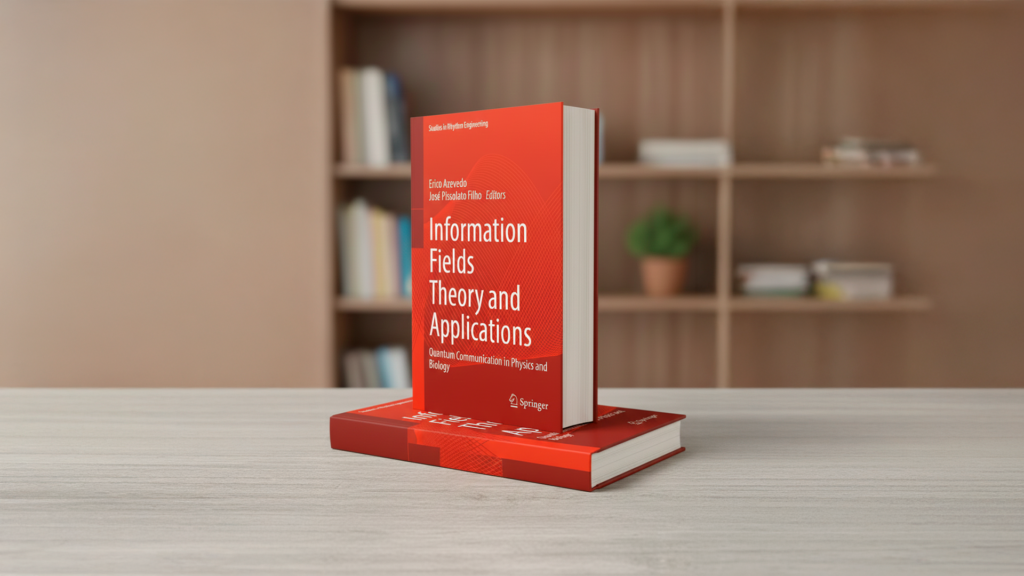
Quantum Communication in Physics and Biology
Springer Nature © 2026