
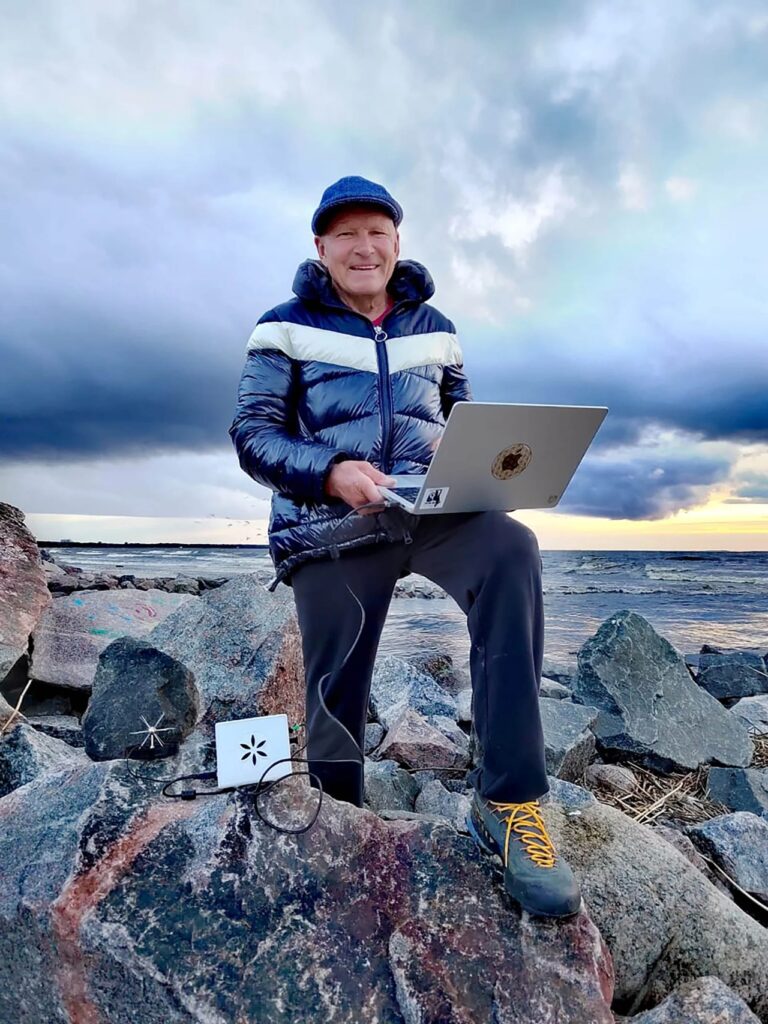
Konstantin Korotkov
How Konstantin Korotkov Captured the Light of Life
About the Book
Information Fields: Theory and Applications (Springer Nature, 2026) is a landmark publication that establishes a new frontier in science. Edited by Erico Azevedo and José Pissolato Filho, this volume brings together 17 chapters from leading researchers around the world to explore how information—not just matter and energy—may be a fundamental building block of reality. The book bridges quantum physics, biology, and psychology, offering a unified framework for understanding how information organizes the universe, from entangled particles to human consciousness.
[Link to book: https://link.springer.com/book/9789819517411]
About the Author: The Pioneer Who Captured the Biofield
Konstantin Korotkov, PhD, is a Russian biophysicist and former Professor at Saint-Petersburg Federal University of Informational Technologies, Mechanics and Optics—a scientist who has spent decades developing technologies to visualize the electromagnetic emissions of living organisms.
Korotkov is best known as the developer of Gas Discharge Visualization (GDV) , also known as electrophotonic imaging—a technique that captures the ultra-weak photon emissions from biological systems under pulsed electrical stimulation. His work builds on the pioneering research of Semyon Kirlian, who first photographed the “aura” of living things in the 1930s. But where Kirlian produced striking images with limited reproducibility, Korotkov transformed the field with quantitative, scientifically rigorous methodology.
The result is the Bio-Well device—a compact instrument that captures biofield images in seconds, analyzes them through sophisticated algorithms, and provides real-time feedback on physiological and psychological states. Used by researchers and clinicians in over 60 countries, Bio-Well represents the first practical bridge between ancient energy concepts and modern biophysics. Korotkov’s work has been published in over 200 peer-reviewed papers and numerous books, including The Energy of Health and The Principles of Bio-Well Analysis. He has collaborated with researchers worldwide, from the Russian Academy of Sciences to the National Institutes of Health, advancing the scientific understanding of biofields and their clinical applications.
Korotkov has also created IUMAB, a worldwide community of professional, student and academic individuals who are exploring conventional and frontier science to develop the line of Bioelectrography, now a part of Biophotonics.
About the Institutions
ITMO University
Saint-Petersburg Federal University of Informational Technologies, Mechanics and Optics (ITMO) is one of Russia’s leading research universities, consistently ranked among the top institutions in information technology and photonics. ITMO’s commitment to interdisciplinary research—bridging physics, biology, and information science—provides the ideal environment for Korotkov’s pioneering work at the intersection of biophysics and consciousness studies.
BioWell
Bio-Well is a high-tech company specializing in the development of Electro-Photonic Imaging (EPI) technologies, also known as Gas Discharge Visualization (GDV). Founded by the renowned physicist Dr. Konstantin Korotkov and headquartered in Louisville, Colorado, the company produces specialized cameras and software designed to map the human “biocontent” or energy field. By capturing and analyzing electron emissions from the fingertips, Bio-Well’s system provides real-time data on an individual’s stress levels, energy balance, and the functional state of various organs and systems, making it a popular tool for researchers, holistic practitioners, and wellness professionals worldwide.
The Central Idea: Life Emits Light—and That Light Carries Information
For centuries, healers and mystics have described an “energy field” surrounding living beings. In Traditional Chinese Medicine, it is called Qi. In Ayurveda, it is Prana. In therapeutic touch and energy medicine, it is the biofield.
But is this field real? Or is it merely metaphor, placebo, wishful thinking?
Korotkov’s answer is unequivocal: the biofield is real, measurable, and clinically relevant. Using GDV technology, he has demonstrated that living organisms emit ultra-weak electromagnetic radiation—photons in the visible and near-UV spectrum—that changes predictably with physiological and psychological states.
As he writes:
All living cells emit electromagnetic fields in the millimeter wavelength range (30-300 GHz), now recognized as the biophysical basis of biofields.
This is not mysticism. It is physics. And it opens a window onto a dimension of life that conventional medicine has largely ignored.
The Technology: Gas Discharge Visualization (GDV)
GDV works on a simple principle: when a biological specimen—a fingertip, a leaf, a drop of blood—is subjected to a brief, high-voltage, high-frequency electrical pulse, it emits a cascade of photons and electrons. These emissions are captured by a high-sensitivity CCD camera, digitized, and analyzed by sophisticated algorithms.
The technical parameters are precise:
- Pulse duration: 10 microseconds
- Voltage: 15 kV
- Frequency: 1024 Hz
- Camera sensitivity: 0.1 lux resolution
The resulting images reveal patterns of light that correspond to the physiological state of the organism. Test-retest reliability for healthy subjects exceeds —comparable to conventional medical measurements.
What makes GDV remarkable is not just that it detects emissions, but that the pattern of emissions carries information. Healthy individuals produce characteristic, organized patterns. Stressed individuals show disrupted, fragmented emissions. Meditators in deep states produce highly coherent, expanded patterns.
Korotkov and his team have developed quantitative metrics:
- Emission area — the total extent of the biofield
- Fractal dimension — the complexity and organization of the pattern
- Entropy metrics — the degree of disorder or coherence
- Stress Index — an algorithm correlating with cortisol surges
These are not subjective interpretations. They are mathematical properties of the captured images, reproducible across subjects and sessions.
The Evidence: What GDV Reveals About Health and Disease
Over decades of research, Korotkov and colleagues have amassed a substantial body of evidence linking GDV parameters to conventional physiological measures:
Stress and Autonomic Function
GDV emission area correlates strongly with heart rate variability (HRV) parameters: Stressed individuals show 23% reduced GDV emission areas compared to healthy controls—a difference that normalizes after stress-reduction interventions.
Neuroendocrine Function
GDV parameters correlate with cortisol rhythms:
Immune Function
GDV texture parameters show significant correlations with lymphocyte activity.
Mitochondrial Function
Most remarkably, GDV patterns appear to reflect mitochondrial health—the energy status of individual cells. Irregular fractal patterns in GDV images precede ATP depletion by 48-72 hours in clinical trials, suggesting biofield imaging could detect metabolic dysfunction before conventional biomarkers.
Clinical Applications
- Anxiety disorders: 15-minute biofield-corrective sessions restore electrophotonic emission patterns to baseline in 78% of patients
- Yoga and meditation: Practitioners show 23% increased emission area post-session ($p = 0.003$)
- Chronic fatigue: Patients exhibit 37% reduced emission versus controls
- Parkinson’s disease: GDV entropy values increase 22 ± 5% in preclinical patients up to 18 months before diagnosis
As Korotkov notes:
GDV parameters correlate strongly with both cellular metabolic states and neurological function, bridging microscopic and macroscopic scales of biological organization.
The Quantum Biology Connection: Mitochondria and Coherent Energy Transfer
GDV’s ability to detect metabolic states points to a deeper truth: life operates on quantum principles. Korotkov grounds his work in the emerging field of quantum biology, citing three key phenomena:
1. Quantum Coherence in Mitochondria
Mitochondria—the power plants of cells—maintain quantum coherence for approximately 500 femtoseconds in their electron transport chains. This duration, while brief, is sufficient to enable near-perfect energy transfer efficiency: 95% compared to the 30% typical of classical systems.
This sustained coherence, first observed in photosynthetic systems by Ishizaki and Fleming, enables electrons to explore multiple pathways simultaneously, finding the most efficient route.
2. Fröhlich-Davydov Solitons
The Fröhlich-Davydov model describes how vibrational energy propagates through biological tissues as solitons—stable, nondispersive wave packets that maintain their shape while traveling along protein α-helices at velocities approaching 1,300 m/s.
These solitonic waves serve as efficient carriers of biological information, coordinating activities from enzymatic reactions to neural synchronization. They provide a physical mechanism for the rapid, noise-free communication observed in living systems.
3. Delocalized π-Electron Networks
Samoylov’s work demonstrates that delocalized π-electrons create conductive pathways along protein structures, facilitating rapid energy distribution with minimal thermal loss. These π-electron networks bear remarkable similarity to the meridian networks described in Traditional Chinese Medicine—suggesting ancient healers may have empirically identified these pathways centuries before their biophysical characterization.
As Korotkov explains:
At the molecular level, delocalized π-electrons form the foundation for biological energy transfer. The unique properties of π-electrons—including their low excitation threshold and extended coherence times—make them ideal for biological information transfer.
Bridging East and West: Meridians, Qi, and Biofield Science
One of the most compelling aspects of Korotkov’s work is its validation of ancient healing traditions. For millennia, Traditional Chinese Medicine has mapped the body’s energy pathways—the meridians—through which Qi flows. Acupuncture points, located along these meridians, are used to regulate health by influencing Qi flow.
Modern science has struggled to find anatomical correlates for these meridians. But GDV imaging reveals something remarkable: the regions where traditional medicine placed meridians correspond to areas of distinct electromagnetic activity.
As Korotkov notes:
Eastern medical systems documented ‘vital energy’ systems (qi and prana) over 3,000 years before Western science developed instruments sensitive enough to detect these phenomena. Where ancient practitioners mapped meridians and chakras through empirical observation, modern biophysics now identifies these as regions of distinct electromagnetic activity and heightened electrical conductivity.
The Bonghan ducts (primo vascular system), first described in the 1960s, may provide the anatomical substrate for these pathways. These thread-like structures, found throughout the body, appear to conduct electromagnetic signals—potentially explaining how acupuncture points communicate across distances. This convergence of ancient and modern does not prove that all traditional claims are correct. But it suggests that empirical observation, across millennia, identified real phenomena that science is only now beginning to measure.
Clinical Applications: Biofield Medicine in Practice
Korotkov’s chapter reviews three evidence-based clinical applications:
- Chronic Pain Management
- Metabolic Disorders
- Post-Traumatic Recovery
Findings presented in the Chapter align with the Biofield Hypothesis proposed by Rubik (2002): that biofields serve as an “organizing matrix” coordinating activity across scales—from electron tunneling in mitochondria to neural synchronization in the brain.
The Bio-Well Device: Bringing Biofield Imaging to the Clinic
The practical manifestation of Korotkov’s research is the Bio-Well device—a compact instrument that captures GDV images in seconds and provides immediate feedback through cloud-based analysis.
The device captures electrophotonic images of all ten fingers (Figure 4 in the chapter), each corresponding to different organ systems according to both traditional acupuncture and Korotkov’s own research. Algorithms analyze:
- Luminance gradients
- Fractal patterns
- Emission area
- Energy distribution
Results are displayed in intuitive formats: energy field images, sector charts, and trend graphs. The system tracks changes over time, enabling monitoring of therapeutic interventions, stress management programs, and wellness protocols.
Validation studies demonstrate robust correlations between Bio-Well parameters and conventional measures:
- HRV coherence
- EEG alpha-rhythm coherence during meditation
- Immune markers: significant correlations with specific GDV texture parameters
As Korotkov and Yanovskaya document in The Principles of Bio-Well Analysis (2024), the technology has now been used in over 1,200 peer-reviewed studies, positioning electrophotonic imaging as a bridge between energy medicine and mainstream diagnostics.
Future Directions: Neurodegeneration, Quantum Biology, and AI
Korotkov’s chapter concludes with three emerging frontiers:
1. Neurodegenerative Disease Modulation
Mitochondrial dysfunction—a hallmark of Alzheimer’s and Parkinson’s diseases—correlates strongly with biofield disturbances. GDV entropy values increase 22 ± 5% in preclinical Alzheimer’s patients up to 18 months before clinical diagnosis (). This suggests biofield imaging could enable earlier intervention than current diagnostic methods.
2. Quantum-Enabled Neuroprotection
Delocalized π-electron networks may underlie observed neuroprotective effects. In vitro studies demonstrate that biofield exposure reduces neuronal apoptosis by 38% in oxidative stress models (, ), likely through stabilization of microtubule quantum states.
3. AI-Enhanced Diagnostics Combining GDV with artificial intelligence achieves 91% accuracy in classifying Parkinson’s disease stages—outperforming conventional motor symptom assessments. This approach detects subtle biofield alterations that precede dopaminergic cell loss by 3-5 years.
Why This Chapter Matters
Korotkov’s contribution to Information Fields is significant for several reasons:
1. It provides empirical validation
For centuries, energy medicine has been dismissed as unscientific. Korotkov provides reproducible, quantitative measurements that correlate with conventional biomarkers.
2. It bridges paradigms
GDV imaging connects Traditional Chinese Medicine with quantum biology, ancient wisdom with modern physics, subjective experience with objective measurement.
3. It offers clinical utility
Biofield assessment is not merely academic—it predicts disease progression, monitors treatment response, and guides intervention with practical applications.
4. It connects to theory.
The biofield Korotkov measures may be a manifestation of the information fields Azevedo and Pissolato describe. Ultra-weak photon emissions, solitonic energy transfer, and electromagnetic coherence could be biological expressions of .
5. It opens new frontiers.
From early detection of neurodegenerative disease to AI-enhanced diagnostics, biofield science points toward a future where medicine addresses not just biochemistry but bioenergetics—the informational dynamics of living systems.
Connections to Other Chapters
Korotkov’s work resonates deeply with other contributions to this volume:
- Chapter 1 (Azevedo & Pissolato): as the fundamental information field—biofields as biological manifestations of this field.
- Chapter 4 (Bandyopadhyay et al.): Fractal hyperspace and microtubule quantum coherence—the physical architecture for biofield reception and transmission.
- Chapter 5 (Schveitzer & Bazzo): Long-distance cellular communication—biophotons and EMFs as mechanisms for biofield signaling.
- Chapter 7 (Ghelman): Developmental biology and morphogenetic fields—biofields as organizing principles in embryogenesis.
- Chapter 8 (Myakishev-Rempel et al.): DNA-water imprinting—possible mechanisms for biofield information storage.
- Chapter 9 (Sheldrake): Morphic resonance—biofields as carriers of collective memory.
- Chapter 10 (Meneghetti): Semantic fields—unconscious information transmission between humans, potentially mediated by biofields.
- Chapter 11 (Radin et al.): Nonlocal experiences—psi phenomena as macro-scale manifestations of biofield dynamics.
Key Takeaways
- Biofields are real and measurable. GDV technology captures ultra-weak electromagnetic emissions that correlate with physiological and psychological states.
- Life operates on quantum principles. Mitochondria maintain quantum coherence for energy transfer; solitons carry information through biological tissues; π-electron networks create conductive pathways.
- GDV parameters correlate with conventional biomarkers. Heart rate variability, cortisol rhythms, immune function, and mitochondrial health all show significant correlations.
- Ancient traditions anticipated modern science. Meridians and Qi, described thousands of years ago, correspond to regions of distinct electromagnetic activity.
- Biofield imaging has clinical utility. From stress assessment to early detection of neurodegeneration, GDV provides practical diagnostic information.
- The Bio-Well device enables real-time monitoring. Compact, user-friendly, and validated by over 1,200 studies, it brings biofield science to the clinic.
- Quantum biology provides the theoretical foundation. Fröhlich-Davydov solitons, delocalized π-electrons, and mitochondrial coherence explain how biofields operate.
- theory offers a unified framework. Biofields may be biological manifestations of the fundamental information fields that organize reality.
About the Author’s Contributions
Konstantin Korotkov has spent decades at the intersection of physics, biology, and consciousness studies—developing technologies, conducting research, and building bridges between scientific paradigms. His work has transformed a controversial field into a rigorous discipline, enabling reproducible measurement of phenomena that were once dismissed as mystical. His presence in this volume testifies to the maturation of biofield science—its transition from fringe to frontier, from speculation to measurement, from alternative to integrative.
For Further Exploration
- Konstantin Korotkov’s website: https://www.korotkov.org
- Bio-Well device: https://www.bio-well.com
- Key books: The Energy of Health, The Principles of Bio-Well Analysis
- Key papers: Korotkov et al. (2017), Bista et al. (2022), Babelyuk et al. (2023)
Explore other Information Fields book chapters
Part I: The Physical Realm
Chapter 1: Information Fields as a Fundamental Physical Primitive
Erico Azevedo & José Pissolato Filho
Chapter 2: The Persistence of Information in a Quantum Reality
Shantena Sabbadini
Chapter 3: Unveiling Quantum Entanglement
Erico Azevedo & José Pissolato Filho
Chapter 4: Fractal Hyperspace Engineering
Anirban Bandyopadhyay, Sudeshna Pramanik & Pushpendra Singh
Part II: The Biophysical Realm
Chapter 5: Long-Distance Cellular Communication: A Review
Mariana Cabral Schveitzer & Maria Luiza Bazzo
Chapter 6: Biofields and Bioenergy
Konstantin Korotkov
Chapter 7: Developmental Biology and Morphogenetic Fields
Ricardo Ghelman
Chapter 8: Imperfection as the Foundation of Life
Ivan V. Savelev, Michael M. Rempel, Oksana Polesskaya, Richard Alan Miller & Max Myakishev-Rempel
Part III: The Biopsychical Realm
Chapter 9: Morphic Resonance and Beyond
Rupert Sheldrake
Chapter 10: Semantic Fields
Antonio Meneghetti
Chapter 11: Nonlocal Experiences in a Quantum Reality
Dean Radin, Helané Wahbeh, Garret Yount, Thomas Brophy, Sitara Taddeo & Arnaud Delorme
Chapter 12: Nonlocal Human Communication: A Unified Framework via the Field
Erico Azevedo
Chapter 13: Exploring the Dimensions of Consciousness
Tommy Akira Goto
Part IV: Applications
Chapter 14: Information Fields in Psychology
Erico Azevedo & Nathália Perin
Chapter 15: Medical Systems and Integrative Health
Ricardo Ghelman, Caio S. Portella & José Ruguê Ribeiro Junior
Chapter 16: Intuition and Noise in Decision Making
Erico Azevedo
Chapter 17: From Metaphysics to Science
Alécio Vidor
About ORIONT
ORIONT is an institute dedicated to research, training, and practical applications of Ontopsychology and human potential development. Co-founded by Erico Azevedo and Nathália Perin, it serves as a bridge between rigorous scientific investigation and the lived experience of human development. Through research, publications, and training programs, ORIONT carries forward the vision of a science that includes the full depth of human experience. [Website: https://oriont.org]
Stay tuned for our ongoing series exploring each chapter of Information Fields in depth. Follow us for deep dives into the frontiers of consciousness research!
#KonstantinKorotkov #Biofield #GDV #BioWell #ElectrophotonicImaging #InformationFields #SpringerNature #ORIONT #EnergyMedicine #QuantumBiology #Mitochondria #Bioelectromagnetism
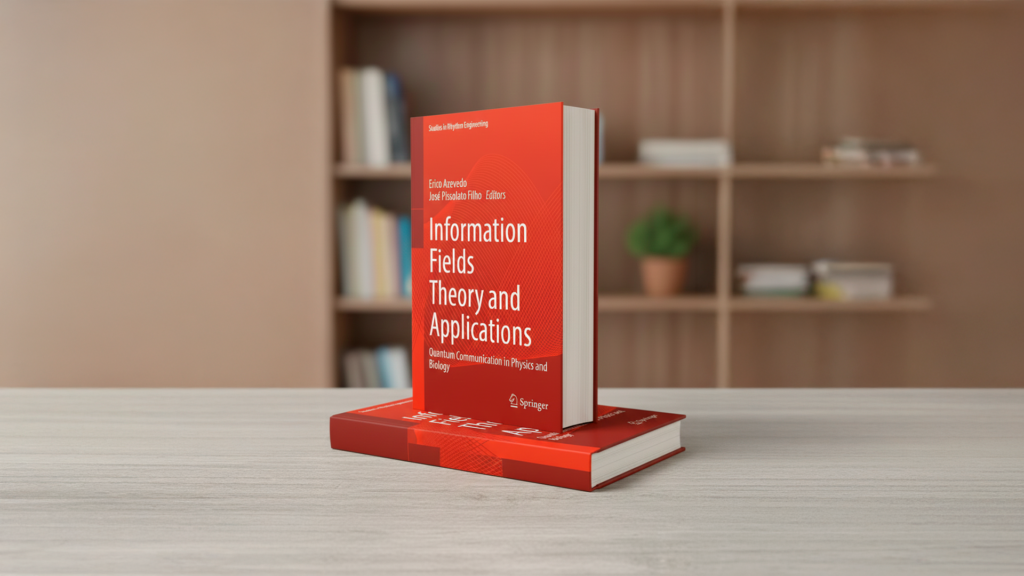
Quantum Communication in Physics and Biology
Springer Nature © 2026