
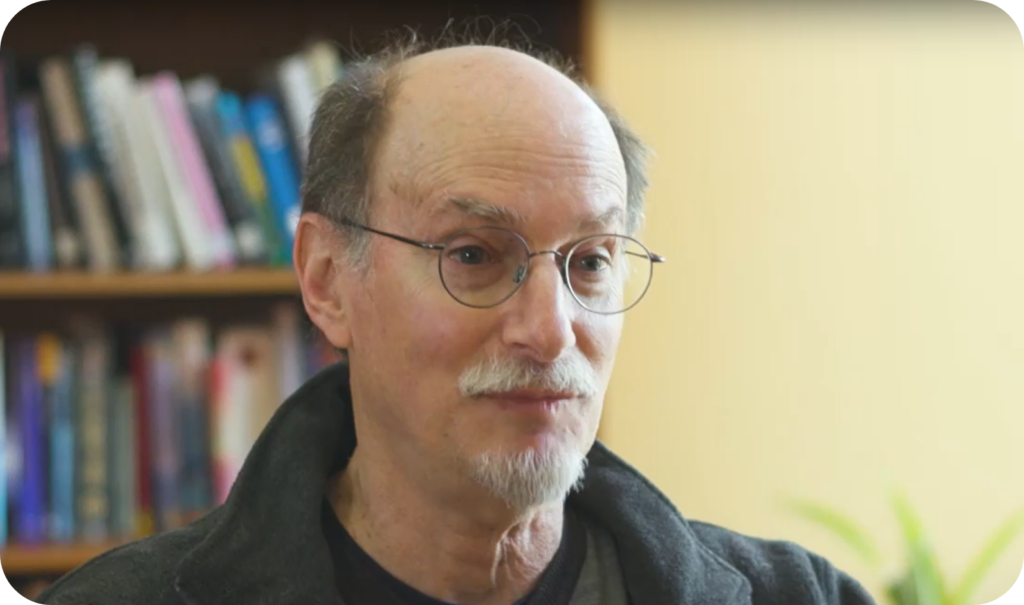
Dean Radin, Helané Wahbeh, Garret Yount, Thomas Brophy, Sitara Taddeo, Richard Tian & Arnaud Delorme
How Dean Radin and the IONS Team Are Building the Scientific Case for a Connected Consciousness
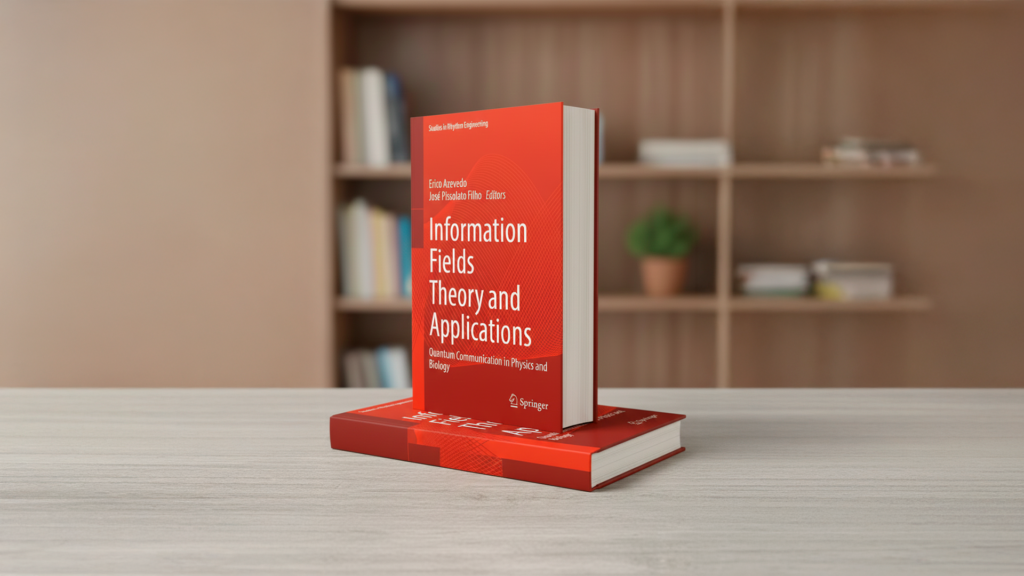
About the Book
Information Fields: Theory and Applications (Springer Nature, 2026) is a landmark publication that establishes a new frontier in science. Edited by Erico Azevedo and José Pissolato Filho, this volume brings together 17 chapters from leading researchers around the world to explore how information—not just matter and energy—may be a fundamental building block of reality. The book bridges quantum physics, biology, and psychology, offering a unified framework for understanding how information organizes the universe, from entangled particles to human consciousness.
[Link to book: https://link.springer.com/book/9789819517411]
About the Lead Author: The Scientist Who Dared to Study the Impossible
Dean Radin, PhD, is one of the most respected and influential figures in the scientific study of consciousness—a researcher who has spent decades applying rigorous methodology to phenomena that most scientists prefer to ignore.
With a background in electrical engineering and psychology, Radin brings a rare combination of technical sophistication and open-minded inquiry to his work. He began his career in the mainstream—working at AT&T Bell Labs and Stanford Research Institute—before dedicating himself full-time to exploring the frontiers of human consciousness.
His approach is simple and uncompromising: follow the data wherever it leads. If telepathy, clairvoyance, and precognition are real, the evidence will show it. If they are not, the evidence will show that too. Either way, science wins.
Over decades of research, Radin has accumulated evidence that challenges the materialist assumptions underpinning modern science—and he has done so with the same statistical rigor, experimental controls, and peer-reviewed publication standards expected in any serious scientific field.
Key Books by Dean Radin
- The Conscious Universe: The Scientific Truth of Psychic Phenomena (1997): A foundational text that analyzes empirical evidence for psi phenomena, making the case that such experiences are scientifically valid.
- Entangled Minds: Extrasensory Experiences in a Quantum Reality (2006): Explores how quantum entanglement might provide a scientific basis for interconnected consciousness.
- Supernormal: Science, Yoga, and the Evidence for Extraordinary Psychic Abilities (2013): Bridges ancient wisdom traditions with modern laboratory evidence.
- Real Magic: Ancient Wisdom, Modern Science, and a Guide to the Secret Power of the Universe (2018): Examines “magic” through the lens of modern science and offers a framework for understanding consciousness’s influence on the physical world.
The IONS Team
This chapter is co-authored by a distinguished group of researchers from the Institute of Noetic Sciences: Helané Wahbeh, Garret Yount, Thomas Brophy, Sitara Taddeo, Richard Tian, and Arnaud Delorme. Together, they represent a multidisciplinary team dedicated to investigating the frontiers of consciousness with scientific rigor. While this review focuses on Radin as the lead voice, the chapter reflects the collaborative strength of IONS—an institution built on the vision that science can and must explore the full range of human experience.
About the Institution: Institute of Noetic Sciences (IONS)
The Founder
Founded in 1973 by astronaut Edgar Mitchell—the sixth man to walk on the moon—IONS emerged from a profound experience Mitchell had during his return journey from space. Gazing at Earth from the cosmos, he felt a overwhelming sense of interconnectedness, a direct knowing that we are part of something larger. He dedicated the rest of his life to studying that experience scientifically.
Mission & Focus
IONS is a non-profit research center and educational organization, located at Petaluma, California, dedicated to investigating the frontiers of consciousness, human potential, and the mind-matter interaction. Its researchers explore topics that conventional science often avoids: psychic phenomena, telepathy, precognition, distant healing, and the relationship between consciousness and physical reality.
Approach
IONS bridges rigorous scientific methodology with the deep questions posed by spiritual and esoteric traditions. It does not assume that science and spirit are opposed; it investigates their connections.
The term “Noetic”: From the Greek noetikós, meaning inner wisdom, direct knowing, or subjective understanding. It points to knowledge that comes not through external observation but through direct inner experience. Dean Radin has served as IONS Chief Scientist since 2001, and also holds a position as Distinguished Professor at the California Institute of Integral Studies (CIIS).
The Central Idea: Consciousness May Not Be Confined to the Brain
For most of modern history, science has operated on an implicit assumption: consciousness is produced by the brain and confined to the skull. Your thoughts, feelings, and perceptions are yours alone, locked inside your head, accessible to no one else.
This assumption has never been proven. It was simply inherited from 19th-century materialism and never seriously questioned.
Radin and his IONS colleagues ask a different question: what if consciousness is more like a field than a product? What if it can extend beyond the body, connect with other minds, and even reach across time?
This is not mysticism. It is a hypothesis—one that generates testable predictions. And over the past century, thousands of experiments have put it to the test. The results, as Radin presents them, are astonishing.
The Evidence: What the Data Show
Radin’s chapter is essentially a tour through the best-evidence for psi phenomena—organized by type, supported by meta-analyses, and presented with the statistical rigor that characterizes his work.
Telepathy: Mind-to-Mind Communication
The most extensively studied form of psi is telepathy—the apparent transfer of information between minds without any known sensory channel.
The ganzfeld protocol (from German, meaning “whole field”) is the gold standard. A “receiver” sits in a relaxed state with eyes covered and ears filled with white noise—a uniform perceptual field that reduces sensory input. Meanwhile, a “sender” in a separate room views a randomly selected target image, attempting to transmit it mentally. After about 20 minutes, the receiver is shown four images and asked to select the one that best matches their impressions. Chance expects 25% accuracy.
The results: A meta-analysis of 117 ganzfeld studies conducted between 1974 and 2018, involving 3,885 sessions, found an average hit rate of 30.6% —a deviation exceeding 8.1 sigma above chance (). In any other scientific field, this level of significance would be celebrated as definitive.
Notably, certain groups performed even better. Creative professionals—musicians, artists—and people who reported prior telepathic experiences achieved average hit rates of 40.1% (6.2 sigma, ). This suggests that telepathic ability, like musical ability, may vary across individuals.
Neurophysiological studies add another layer. fMRI experiments have shown that specific brain regions in receivers correlate with distant senders’ experiences of emotional or visual stimuli. EEG studies have detected synchronized brain activity between isolated twins. And dozens of experiments on the autonomic nervous system have found that when someone stares at a distant person, the target’s physiological responses change—even in electromagnetically shielded rooms. A meta-analysis of these “distant staring” experiments yielded an effect of 3 sigma (). Something is happening that conventional physics cannot explain.
Precognition: Perceiving the Future
Even more controversial is the possibility of perceiving future events—precognition. Radin reviews decades of evidence.
Early studies used forced-choice designs: participants guessed which of several targets would later be randomly selected. A meta-analysis of 309 such studies (1935–1987), involving 2 million trials by 50,000 participants, found an overall significance of 11 sigma (). The effect was small but stable across 50 years of replications.
More sophisticated paradigms measure unconscious physiological responses to future stimuli. Participants are connected to sensors measuring skin conductance, heart rate, pupil dilation—while a computer randomly selects calm or emotional images to show them a few seconds later. The striking finding: the body reacts before the stimulus occurs. It “knows” whether the next image will be emotional or calm, even though the choice is random and the participant has no conscious awareness.
A meta-analysis of 26 such experiments (1978–2010) found cumulative effects of 5.3 to 6.9 sigma ( to ), with stronger effects in higher-quality studies. A 2018 update including 27 new studies found that preregistered experiments—those registered before data collection—achieved 3.3 sigma (). As Radin notes, these findings suggest that our physiological systems may subtly “pre-react” to future events, without conscious awareness.
Mind-Matter Interaction: Psychokinesis
The most direct challenge to materialist physics comes from studies suggesting that intention can influence physical systems.
Early research focused on dice. Participants tried to mentally influence the outcomes of thrown dice. A meta-analysis of 73 publications (1935–1987), covering 2.6 million dice throws, found an overall deviation of 19 sigma. Even a rigorously defined subset using mechanically balanced dice yielded 2.6 sigma ().
With the advent of electronics, researchers turned to random number generators (RNGs) —devices that produce truly random sequences based on quantum processes like radioactive decay or electron tunneling. Thousands of experiments have tested whether human intention can bias these outputs.
The first major meta-analysis found an overall 6.8 sigma effect (), with no evidence of selective reporting or methodological bias. Subsequent analyses confirmed the result, showing that publication bias could not explain the outcomes. More recent experiments have tested whether consciousness can influence quantum interference itself. Using optical interferometers, researchers ask participants to mentally influence the path of photons or gain “which-path” information about them. To date, 30 experiments across six labs have tested this hypothesis; 14 reported statistically significant results, yielding a cumulative binomial probability of . An independent review concluded that these studies collectively appear to demonstrate an interaction between consciousness and quantum systems.
Global Consciousness: Mind at Scale
The most ambitious project in this domain is the Global Consciousness Project (GCP) , launched in 1998. A worldwide network of RNGs continuously records random data, second by second. The project asks a simple question: do moments of mass public attention—the opening ceremony of the Olympics, a terrorist attack, a natural disaster—correlate with deviations in the RNG outputs?
By 2025, the dataset exceeded 100 GB, representing trillions of random bits. The first study examined 500 such events between 1998 and 2015. The cumulative deviation from chance was 7.3 sigma (). Further analysis found correlations between RNG outputs and stock market sentiment, Google search terms, and New Year’s Eve celebrations. Whether this represents a form of global psychokinesis or a “goal-oriented” psi effect associated with investigators’ choices, the statistical significance is undeniable.
The Critics: Objections and Responses
Radin does not shy away from criticism. He addresses the major objections with characteristic clarity.
“This violates the laws of physics.”
This objection, Radin notes, is based on 19th-century classical physics—not the quantum physics of today. Concepts like nonlocality, entanglement, and observer effects are now central to physics. If consciousness relates in any way to quantum processes, then nonlocal perception and influence are no longer impossible.
“The effects are too small to matter.”
This is falsified by real-world applications: the US government’s formerly classified StarGate program used remote viewing for espionage with documented success. A CIA-sponsored review acknowledged that “a statistically significant laboratory effect has been demonstrated.” A former Secretary of Defense wrote that “the success rates were quantifiable, and impressive.” In 2024, the National Security Agency publicly acknowledged that “as outrageous as it sounds, the secret program was very successful.“
“It’s just publication bias.”
Formal simulations testing the effects of questionable research practices (QRPs) have shown that even under worst-case assumptions, the core results remain significant. For the RNG literature, the cumulative effect remained at . For ganzfeld studies, the results remained at 5.2 sigma (). Bias cannot explain the data.
The Quantum Bridge: Theoretical Frameworks
If psi phenomena are real, how might they work? Radin explores several quantum-inspired frameworks:
Orchestrated Objective Reduction (Orch-OR): Proposed by Roger Penrose and Stuart Hameroff, this theory suggests that consciousness arises from quantum collapses in microtubules—protein structures inside neurons. Because these collapses are nonlocal, consciousness could entangle with systems outside the brain, enabling telepathy or psychokinesis. Emerging evidence for quantum coherence in microtubules supports the model’s plausibility.
Observer-Agency and Retrocausality: Henry Stapp’s elaboration of the von Neumann-Wigner hypothesis treats mental intention as an active agent in selecting among quantum alternatives. Because quantum formalism is time-symmetric, this allows for retrocausal influences—future choices constraining past quantum events—providing a mathematical basis for precognition.
Nonlocality and Entanglement: Bell-test violations have demonstrated that spatial separation does not preclude correlations between entangled particles. Psi research extends this idea to biological systems. If life can exploit quantum effects for photosynthesis and magnetoreception, it may also exploit them for consciousness. These frameworks do not prove psi. They show that psi is not impossible—that modern physics provides conceptual space for phenomena that classical physics ruled out.
Why This Chapter Matters
Radin’s chapter is not just a review of evidence. It is a challenge to the materialist assumptions that have dominated science for centuries.
If consciousness can operate nonlocally—if it can reach across space and time—then:
- The universe is far more connected than we imagined. We are not isolated individuals in a dead cosmos; we are participants in a living, relational reality.
- Mind is not confined to brain. Consciousness may be more fundamental than matter, not merely an epiphenomenon of neural activity.
- Ancient wisdom traditions may have been right. The experiences reported by mystics, saints, and sages across cultures—oneness, interconnection, transcendence—may be direct perceptions of reality, not hallucinations.
- Human potential is far greater than we assume. If intention can influence the world, if perception can extend beyond the senses, then what we call “normal” may be only a fraction of what is possible.
Science must expand its worldview. The rejection of psi on a priori grounds—because it “cannot happen”—is not science. Science follows data, not assumptions.
Final Thoughts
Reading Radin’s chapter, one is struck by the sheer weight of evidence he assembles. Meta-analysis after meta-analysis, experiment after experiment, all pointing in the same direction. The effects are small, but they are real—and they have been replicated across decades and laboratories.
Radin does not claim that psi is proven beyond all doubt. He claims that the evidence is sufficient to warrant serious scientific attention—that a priori dismissal is no longer tenable.
As he writes in his conclusion:
“The preponderance of the evidence viewed in light of promising theoretical models suggests that consciousness may play a fundamental role in the nature of the physical world.”
This is not mysticism. It is not wishful thinking. It is the conclusion of a scientist who has spent his life following the data—and found that the data lead to a place far more interesting than anyone expected.
Key Takeaways
- The evidence is robust. Meta-analyses spanning decades and millions of trials show statistically significant effects for telepathy, precognition, and mind-matter interaction—at levels that would be celebrated in any other field.
- Quantum physics provides a framework. Concepts like nonlocality, entanglement, and observer effects offer theoretical grounding for phenomena that seem impossible under classical physics.
- Criticisms have been addressed. Claims of impossibility rely on outdated 19th-century physics. Concerns about publication bias have been tested and found insufficient to explain the results.
- Real-world applications exist. The US government’s StarGate program demonstrated practical utility for remote viewing, with documented success in espionage.
- Consciousness may be fundamental. The data invite us to consider that consciousness is not merely a byproduct of brain activity, but an active participant in shaping physical reality.
- The IONS team represents a new kind of science. Collaborative, interdisciplinary, rigorous—and willing to explore the full range of human experience.
About the IONS Team
This chapter reflects the collaborative strength of the Institute of Noetic Sciences:
- Helané Wahbeh — Director of Research at IONS, expert in consciousness and physiology
- Garret Yount — Molecular biologist investigating mind-body interactions
- Thomas Brophy — Physicist and cosmologist exploring information fields
- Sitara Taddeo — Researcher in consciousness and human potential
- Richard Tian — Contributing researcher at IONS
- Arnaud Delorme — Neuroscientist specializing in EEG and consciousness
Together with Dean Radin, they represent a multidisciplinary team committed to investigating the frontiers of consciousness with scientific rigor.
For Further Exploration
- Institute of Noetic Sciences: https://noetic.org
- Dean Radin’s Website: https://www.deanradin.com
- Global Consciousness Project: http://global-mind.org
- Key Books:The Conscious Universe, Entangled Minds, Real Magic
Explore other Information Fields book chapters
Part I: The Physical Realm
Chapter 1: Information Fields as a Fundamental Physical Primitive
Erico Azevedo & José Pissolato Filho
Chapter 2: The Persistence of Information in a Quantum Reality
Shantena Sabbadini
Chapter 3: Unveiling Quantum Entanglement
Erico Azevedo & José Pissolato Filho
Chapter 4: Fractal Hyperspace Engineering
Anirban Bandyopadhyay, Sudeshna Pramanik & Pushpendra Singh
Part II: The Biophysical Realm
Chapter 5: Long-Distance Cellular Communication: A Review
Mariana Cabral Schveitzer & Maria Luiza Bazzo
Chapter 6: Biofields and Bioenergy
Konstantin Korotkov
Chapter 7: Developmental Biology and Morphogenetic Fields
Ricardo Ghelman
Chapter 8: Imperfection as the Foundation of Life
Ivan V. Savelev, Michael M. Rempel, Oksana Polesskaya, Richard Alan Miller & Max Myakishev-Rempel
Part III: The Biopsychical Realm
Chapter 9: Morphic Resonance and Beyond
Rupert Sheldrake
Chapter 10: Semantic Fields
Antonio Meneghetti
Chapter 11: Nonlocal Experiences in a Quantum Reality
Dean Radin, Helané Wahbeh, Garret Yount, Thomas Brophy, Sitara Taddeo & Arnaud Delorme
Chapter 12: Nonlocal Human Communication: A Unified Framework via the Field
Erico Azevedo
Chapter 13: Exploring the Dimensions of Consciousness
Tommy Akira Goto
Part IV: Applications
Chapter 14: Information Fields in Psychology
Erico Azevedo & Nathália Perin
Chapter 15: Medical Systems and Integrative Health
Ricardo Ghelman, Caio S. Portella & José Ruguê Ribeiro Junior
Chapter 16: Intuition and Noise in Decision Making
Erico Azevedo
Chapter 17: From Metaphysics to Science
Alécio Vidor
About ORIONT
ORIONT is an institute dedicated to research, training, and practical applications of Ontopsychology and human potential development. Co-founded by Erico Azevedo and Nathália Perin, it serves as a bridge between rigorous scientific investigation and the lived experience of human development. Through research, publications, and training programs, ORIONT carries forward the vision of a science that includes the full depth of human experience. [Website: https://oriont.org]
Stay tuned for our ongoing series exploring each chapter of Information Fields in depth. Follow us for deep dives into the frontiers of consciousness research!
#DeanRadin #IONS #HelanéWahbeh #GarretYount #ArnaudDelorme #InformationFields #QuantumConsciousness #SpringerNature #ORIONT #Telepathy #Precognition #Psi #NoeticSciences
Quantum Communication in Physics and Biology
Springer Nature © 2026