
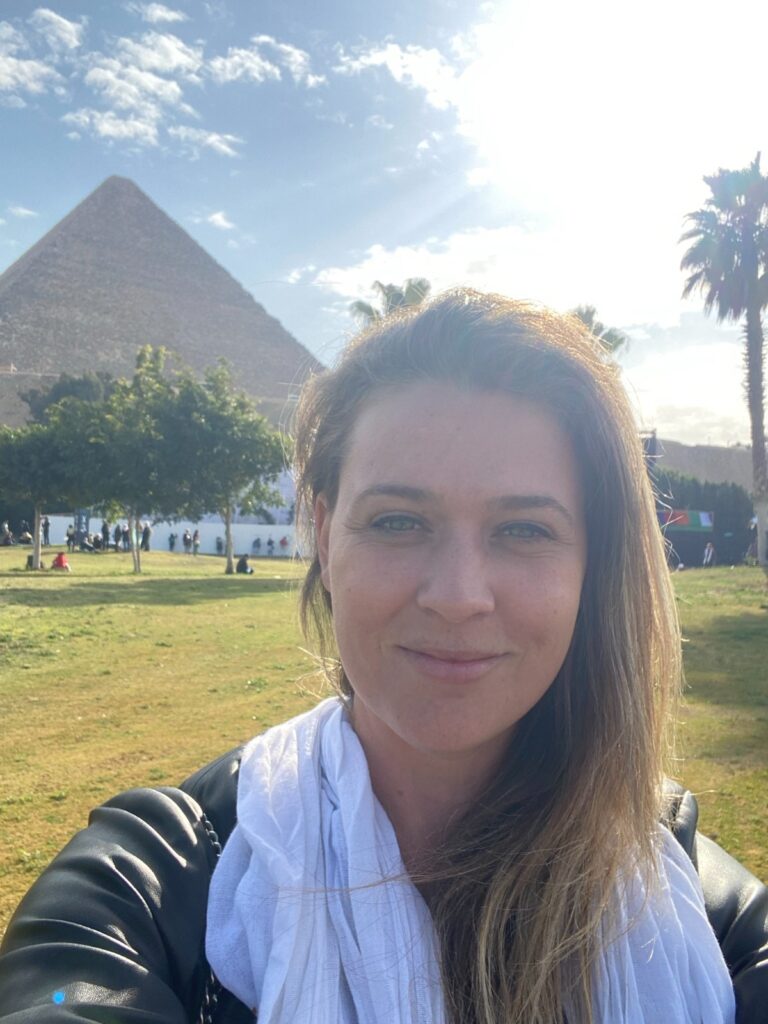
Nathália Perin & Erico Azevedo
How Information Fields Theory Can Provide Psychology Its Long-Awaited Unification
About the Book
Information Fields: Theory and Applications (Springer Nature, 2026) is a landmark publication that establishes a new frontier in science. Edited by Erico Azevedo and José Pissolato Filho, this volume brings together 17 chapters from leading researchers around the world to explore how information—not just matter and energy—may be a fundamental building block of reality. The book bridges quantum physics, biology, and psychology, offering a unified framework for understanding how information organizes the universe, from entangled particles to human consciousness.
[Link to book: https://link.springer.com/book/9789819517411]
About the Authors: A Meeting of Worlds
Nathália Perin, MSc, is a clinical psychologist, psychoanalyst, and co-founder and Vice-President of ORIONT. With over a decade of clinical experience, she brings to this work a rare combination of depth: a Master’s in Clinical Psychology from PUC/SP, psychoanalytic training from the Centro de Estudos Psicanalíticos de São Paulo, and specialization in strategic people management. Her thesis on Ontopsychological psychotherapy mapped the field from 2007 to 2018, establishing her as a leading voice in the integration of depth psychology with emerging scientific paradigms.
Erico Azevedo, PhD, is the other half of this remarkable partnership. With doctorates in both Electrical Engineering (UNICAMP) and Clinical Psychology (PUC/SP), he embodies the bridge this chapter represents: the precision of physics and the depth of psychology, the rigor of engineering and the sensitivity of clinical practice.
Together, they are not merely proposing a theory—they are living proof that the integration of science and psyche is possible. Their collaboration at ORIONT, the institute they co-founded, is a living laboratory where the ideas in this chapter are tested, refined, and applied daily.
About the Institution: ORIONT
ORIONT is an institute dedicated to research, training, and practical applications of Ontopsychology and human potential development. Co-founded by Erico Azevedo and Nathália Perin, it serves as a bridge between rigorous scientific investigation and the lived experience of human transformation. Through research, publications, clinical training, and authentication consulting, ORIONT carries forward the vision of a science that includes the full depth of human experience.
The Big Picture: Psychology’s Unfulfilled Dream
Psychology has a problem. Not a small problem—a foundational one.
Since its birth as a scientific discipline, psychology has been haunted by a question it cannot answer: what is its unifying framework? Physics has its fundamental forces and quantum mechanics. Biology has evolution and genetics. But psychology? It has a collection of brilliant approaches from Freud, Jung, Rogers, Skinner, Husserl, and dozens of others—each illuminating a corner of the human experience, none providing a complete picture.
The result is a discipline fragmented into competing schools, speaking different languages, using different methods, and often talking past one another. The behaviorist measures observable responses. The psychoanalyst plumbs the unconscious. The humanist celebrates subjective experience. The cognitive scientist models information processing. All are right—and all are incomplete.
This fragmentation is not for lack of brilliant minds. The pioneers of psychology intuited something deeper, something that connected their disparate observations. Freud spoke of unconscious communication. Jung described synchronicity—meaningful coincidences that defy causal explanation. Husserl wrote of intersubjectivity and the living body (Leib). Lewin developed field theory in social psychology. Moreno wrote of “tele”—a mysterious connection between individuals.
All were reaching for the same thing: a framework that could account for the interconnectedness of human experience, the depth of the unconscious, and the reality of meaning.
But they lacked the physics.
What Physics Now Offers Psychology
Here is where the story becomes extraordinary. In the same decades that psychology was developing its fragmented insights, physics was undergoing revolutions that would eventually provide the missing pieces.
Quantum nonlocality—the discovery that entangled particles remain connected across any distance, instantaneously influencing each other without any signal passing between them—offers a physical model for what Jung called synchronicity and what every therapist has experienced: moments of profound connection that defy explanation.
Information thermodynamics—the realization that information is not abstract but physical, subject to laws of energy and entropy—provides a way to understand how mental patterns can become “stuck” (trauma, complexes, repetitive behaviors) and how they can transform.
Field theory—from Faraday and Maxwell to modern quantum field theory—offers a way to think about the invisible structures that organize experience, from the morphogenetic fields of biology to the semantic fields of human interaction.
What Perin and Azevedo propose is bold but simple: these are not analogies. They are descriptions of the same reality.
The information fields () that entangle particles also connect minds. The coherence that enables quantum computation also enables therapeutic attunement. The phase transitions that occur in physical systems also occur in psychological development. Psychology, in other words, has been studying information fields all along—it just didn’t know it.
The Three Threads That Unify Psychology
If this is true, then the disparate insights of psychology’s pioneers should find a natural home within the information fields framework. Perin and Azevedo identify three threads that run through every major school of thought:
Thread 1: The Ontic Core
Every tradition recognizes something fundamental at the center of human being. Freud called it the Id. Jung called it the Self. Husserl wrote of the transcendental Ego. Humanists speak of an innate drive toward self-realization. Religion calls it the soul.
Whatever the name, the intuition is the same: there is something at the core of each person that is not created by culture, not produced by conditioning, not reducible to neural firing. It is the source of authentic being, the “project of nature” that each of us is here to fulfill.
Thread 2: Interconnectedness
Every therapeutic tradition also recognizes that we are not isolated. Freud discovered that therapist and client enter a mysterious resonance he called “evenly suspended attention.” Husserl analyzed Einfühlen—the empathic intuition that allows us to grasp another’s experience. Moreno wrote of “tele,” a connection that precedes and enables all therapeutic work. Jung documented countless cases of synchronicity—meaningful coincidences that link inner and outer events.
These are not separate phenomena. They are manifestations of the same reality: human beings are nodes in a shared informational field.
Thread 3: Repetition vs. Creativity
Finally, every tradition recognizes the tension between mechanical repetition and creative emergence. Freud’s compulsion to repeat. Jung’s complexes. Cognitive psychology’s heuristics. All describe how the psyche gets stuck in patterns that outlive their usefulness.
But the same traditions also recognize the possibility of breakthrough—moments when the pattern breaks, when something new emerges, when the person becomes more than their history.
This tension, Perin and Azevedo argue, is the dynamic of information fields themselves: the pull toward stable attractors versus the drive toward novelty and growth.
Ontopsychology: The Framework That Was Always There
Among the many schools of psychology, one stands out as having built its entire approach on these three threads: Ontopsychology, founded by Antonio Meneghetti in the 1970s.
Long before quantum biology or information field theory, Meneghetti articulated three discoveries that now find their home in :
The Ontic In Sé: The intrinsic informational core of each being—the “project of nature” that unfolds in space and time. It is not a metaphor. It is a physical reality, a transceiver immersed in the informational universe.
Semantic Fields: The language life uses among its individuations. Information transferred without energy—exactly what describes. Meneghetti’s clinical observations, decades ago, anticipated what Azevedo’s Faraday cage experiments would later confirm.
The Monitor of Deflection: The mechanism that distorts information before it reaches consciousness. Cultural conditioning, trauma, repression—all are forms of “noise” that interfere with the authentic signal of the ontic core.
And at the center of it all: images. Dreams, fantasies, intuitions—these are not random productions of an idle brain. They are geometric projections of the ontic core, revealing the psyche’s project before it unfolds in space and time. “Images don’t lie,” as the saying goes. Perin, with her may years of clinical experience and psychoanalytic training, has worked with thousands of such images. She knows their power. She has seen how a single dream can reveal what months of conversation cannot. And now, with the framework, she has a language to describe why.
The Research: When the Numbers Match the Experience
But this is not just theory. Perin and Azevedo did something rare: they put these ideas to the test.
In a study with 31 participants, they measured what happens during therapy sessions—specifically, during the moments when clients report their dreams. They used:
- Pulse rate and oxygen saturation (via digital oximeters)
- Biophoton emissions (via GDV-Kirlian electrophotonic imaging)
- Statistical analysis of the correlations between therapist and client
What they found astonished even them.
During the “problem” phase of therapy—when client and therapist discussed symptoms and difficulties—physiological signals showed minimal correlation (around 2%). But during dream reporting, something shifted dramatically.
Correlations jumped to as high as 96%. Pulse rates aligned. Biophoton emissions synchronized. Therapist and client, though physically separate, were physiologically attuned at levels that cannot be explained by chance ().
This is not suggestion. This is not empathy in the conventional sense. This is field resonance—the same phenomenon that entangles particles, now manifesting in the therapeutic relationship.
The clinical outcomes were equally striking. On the Sifneos scale—a validated measure of therapeutic progress—participants scored 5.4 out of 7.0, well above the threshold for clinically significant change. Self-understanding improved. Symptoms relieved. Relationships transformed.
And 97% of participants reported gaining new insights from their dreams—insights that often contradicted their conscious preferences but proved accurate guides to authentic living.
Lives Transformed
Behind the numbers are people. Three cases from the study illustrate what this looks like in practice:
A young man paralyzed by family conflict. His father had schizophrenia. His family demanded loyalty. He felt torn, guilty, alienated. His dreams showed him a desolate Martian landscape, a father’s body half-formed, a home filled with decapitated figures. Through therapy, he learned to read these images—not as random nightmares but as field projections revealing his true situation. He gained autonomy. He improved his relationships. He started gardening, grounding himself in practical life. The Martian landscape gave way to lush jungle. The field had shifted.
A young woman with bipolar disorder. Her mother had been raped and considered abortion. She grew up feeling unwanted, unstable, trapped. Her dreams showed her beaches that turned oppressive, homes that became prisons, children who murdered mother figures. Therapy connected her mood swings to early trauma—not as abstract interpretation but as direct reading of the field. The work was intense, and she left after three sessions. A year later, she reported stabilization off medication. The field, once distorted, had found its own path to coherence.
A 40-year-old psychologist seeking more. Seventeen years of practice, successful by any measure—yet she felt something missing. Her dreams showed her open filing cabinets (untapped opportunities), a vibrant hillside home (unconventional living), dogs jumping off a balcony (take the leap). She launched new ventures, embraced new ways of living, welcomed a child. The field had been guiding her all along; she just needed to learn its language.
These are not anecdotes. They are demonstrations of a principle: when people learn to read the field—through dreams, through intuition, through authentic attention—their lives reorganize around a deeper intelligence.
What This Means for Psychology
If Perin and Azevedo are right—and the evidence is compelling—then psychology stands at a threshold.
For the first time, the discipline has a unifying framework that:
- Honors the depth of psychoanalysis
- Respects the rigor of behaviorism
- Includes the meaning-focus of humanism
- Grounds it all in fundamental physics
The implications are profound:
For therapists: The work is no longer about applying techniques from different schools. It is about learning to read the field—through dreams, through somatic cues, through the resonance between client and therapist. The goal is not symptom removal but authenticity realignment: clearing the noise so the authentic signal can emerge.
For researchers: The field provides measurable variables. The noise term $\eta$ can be quantified. The authenticity index can be calculated. Physiological correlations can be tracked. Psychology becomes a science without losing its soul.
For clients: The message is empowering. You are not a bundle of symptoms or a collection of conditioned responses. You have an ontic core—a project of nature—that is constantly communicating with you through images, intuitions, and dreams. Learning to read this language is the path to authentic living.
For the culture: The old divide between science and meaning dissolves. Physics and psychology, matter and mind, objective measurement and subjective experience—all are expressions of the same underlying reality: information fields.
Why This Chapter Matters
Reading Perin and Azevedo’s chapter, one senses that something significant is happening. This is not another theory to add to psychology’s crowded marketplace. It is a synthesis—a framework that can hold all the others.
The clinical wisdom of a thousand years, from shamans to psychoanalysts, finds its validation in quantum field theory. The intuitions of the pioneers—Freud’s unconscious communication, Jung’s synchronicity, Husserl’s intersubjectivity—find their mathematical expression in Lagrangian mechanics.
And at the center of it all is a simple, radical idea: you have a core. It is real. It speaks to you. And when you learn to listen, your life transforms. This is is physics, biology and psychology. It is the same story, told in different languages, now finding its unified voice.
Key Takeaways
- Psychology has long needed a unifying framework. The information fields () provide it—grounded in physics yet honoring psychological depth.
- Three threads unify all major schools: an ontic core (the authentic self), interconnectedness (the relational field), and the tension between repetition and creativity.
- Ontopsychology anticipated this synthesis. Meneghetti’s three discoveries—the ontic In Sé, semantic fields, and the monitor of deflection—find their physical basis in .
- Dreams are field carriers. Clinical research shows therapist-client physiological synchrony up to 96% during dream reporting ().
- The framework is empirically validated. Physiological measurements, clinical outcomes, and statistical analysis converge on the same conclusions.
- Authenticity can be modeled. The authenticity index quantifies alignment with the ontic core; therapy becomes noise reduction and signal amplification.
- Clinical observation inspires experimental science. The therapist-client synchrony observed in this study directly led to Faraday cage experiments validating nonlocal coupling.
- Integration is possible—and happening. At ORIONT, the synthesis of depth psychology and quantum physics is not theoretical; it is practiced daily.
About the Authors’ Journey
Nathália Perin began her career in the consulting room, working with clients one-on-one, listening to their dreams, their pains, their longings. Over a decade of practice, she accumulated a wisdom that no textbook could provide: a felt sense of the field that connects therapist and client, a recognition that something deeper than technique was operating in successful therapy.
Erico Azevedo began his career in the laboratory, measuring signals, analyzing data, building models. He knew the precision of engineering and the rigor of physics. But he also knew, from his own journey, that these tools could be turned toward questions science usually avoids. Together, they represent the integration this chapter embodies: the consulting room and the laboratory, the dream and the equation, the personal and the universal. Their work at ORIONT is a living demonstration that the divide between science and soul was never real—only a gap in our understanding, now being bridged.
For Further Exploration
- ORIONT Institute: https://oriont.org
- Nathália Perin’s profile: https://oriont.org/nathalia-perin/
- Key concepts: Ontic In Sé, semantic field, monitor of deflection, authenticity index, field coherence
Explore other Information Fields book chapters
Part I: The Physical Realm
Chapter 1: Information Fields as a Fundamental Physical Primitive
Erico Azevedo & José Pissolato Filho
Chapter 2: The Persistence of Information in a Quantum Reality
Shantena Sabbadini
Chapter 3: Unveiling Quantum Entanglement
Erico Azevedo & José Pissolato Filho
Chapter 4: Fractal Hyperspace Engineering
Anirban Bandyopadhyay, Sudeshna Pramanik & Pushpendra Singh
Part II: The Biophysical Realm
Chapter 5: Long-Distance Cellular Communication: A Review
Mariana Cabral Schveitzer & Maria Luiza Bazzo
Chapter 6: Biofields and Bioenergy
Konstantin Korotkov
Chapter 7: Developmental Biology and Morphogenetic Fields
Ricardo Ghelman
Chapter 8: Imperfection as the Foundation of Life
Ivan V. Savelev, Michael M. Rempel, Oksana Polesskaya, Richard Alan Miller & Max Myakishev-Rempel
Part III: The Biopsychical Realm
Chapter 9: Morphic Resonance and Beyond
Rupert Sheldrake
Chapter 10: Semantic Fields
Antonio Meneghetti
Chapter 11: Nonlocal Experiences in a Quantum Reality
Dean Radin, Helané Wahbeh, Garret Yount, Thomas Brophy, Sitara Taddeo & Arnaud Delorme
Chapter 12: Nonlocal Human Communication: A Unified Framework via the Field
Erico Azevedo
Chapter 13: Exploring the Dimensions of Consciousness
Tommy Akira Goto
Part IV: Applications
Chapter 14: Information Fields in Psychology
Erico Azevedo & Nathália Perin
Chapter 15: Medical Systems and Integrative Health
Ricardo Ghelman, Caio S. Portella & José Ruguê Ribeiro Junior
Chapter 16: Intuition and Noise in Decision Making
Erico Azevedo
Chapter 17: From Metaphysics to Science
Alécio Vidor
About ORIONT
ORIONT is an institute dedicated to research, training, and practical applications of Ontopsychology and human potential development. Co-founded by Erico Azevedo and Nathália Perin, it serves as a bridge between rigorous scientific investigation and the lived experience of human development. Through research, publications, and training programs, ORIONT carries forward the vision of a science that includes the full depth of human experience. [Website: https://oriont.org]
Stay tuned for our ongoing series exploring each chapter of Information Fields in depth. Follow us for deep dives into the frontiers of consciousness research!
#NatháliaPerin #EricoAzevedo #InformationFields #ClinicalPsychology #DreamAnalysis #Authenticity #ORIONT #SpringerNature #PsiField #QuantumPsychology #Ontopsychology #TherapeuticField #UnityOfKnowledge

Quantum Communication in Physics and Biology
Springer Nature © 2026